

Getting To Know: William & Mary-Again
Back in “my day,” William & Mary was one of my aspirational schools–until I took the SATs.
In 2014 the College of William & Mary.changed its branding to reflect a broader mission. Visit their Web site and you will see that the school refers to itself as ‘William & Mary’.’ Hence the photo that you see up top.
This helps the school’s admissions team address questions from parents and students who are considering William & Mary versus public and private research universities, versus small liberal arts colleges. William & Mary also considers itself against a varied set of peer institutions. Most of them are larger schools with more research oriented missions.
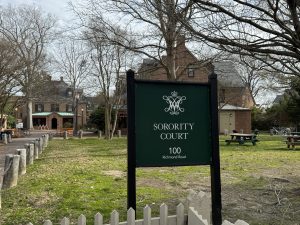
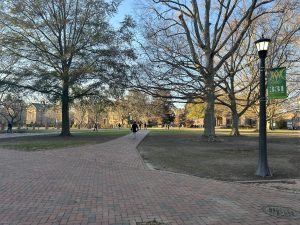
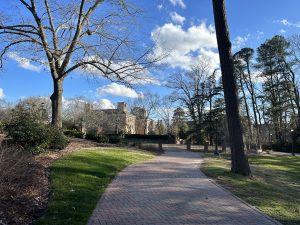
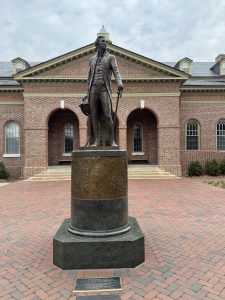
I gathered a few photos on Pinterest for you and watched a few YouTubes to gather more impressions. I also want to thank my friends and colleagues Karime Jankauskus, April Paris-Joseph, Shari Powell, and Donna Sakabu, who provided photos. I’ve dropped some below. As you will see William & Mary extends the colonial theme throughout campus, even into the more modern architecture.



William & Mary’s undergraduate admissions office does an impressive job with its own YouTube page.
Caroline Donovan Assistant Director of Regional Recruitment, who covers Delaware, Maryland and Pennsylvania for William & Mary was quite generous with her time and patient with my questions. Please listen to our conversation now! This is a fabulous interview with special information not in this story that you should not miss!
Like Boston College, William & Mary has called itself a college, but it’s really a research university.
William & Mary has more than 7,000 undergraduates as well as more than 2,600 graduate and professional students. Undergraduates earn degrees in the liberal arts, business and education, including six jointly-awarded degrees with St. Andrews University in Scotland.
William & Mary was recognized as one of the first Public Ivy schools in 1985. It’s the second oldest college in America (after Harvard) and the first to have a chapter of Phi Beta Kappa, the country’s oldest academic honor society. It is also a national leader at study abroad and producing Peace Corps volunteers. It also runs its own academic year and summer programs in residence in Washington DC.
There are some important academic differences between William & Mary and many flagship universities.
In addition to being a smaller undergraduate focused school, William & Mary students share a common College Curriculum. This includes:
- Two freshman seminars, one in the fall, one in the spring
- Cross-disciplinary courses taken during the sophomore year
- A global learning experience that can be taken on or off campus during the junior year
- A course in Difference, Equity and Justice, also taken during the junior year
- A senior capstone
- Other requirements: Knowledge Domains, Foreign Language, Mathematics, Creative & Performing Arts
UVa. has similarly rigorous general education requirements. But most larger state schools do not.
Unlike other high-profile research universities, William & Mary does not grant degrees in engineering. Students have the option to apply to a 3-2 program with Columbia University. They also have the option to major in Engineering Physics and Applied Design. Combine this with a Business Analytics or Economics minor and you would have an interesting combination for an internship or full-time job in management consulting.
Forty percent of William & Mary undergraduates major in Math or the Sciences. There are two interesting science minors that you don’t see at many schools: Kinesiology and Health Sciences and Marine Science. If you like what you see as you consider William & Mary, and want to become a physician, check out the pre-health advising page. You won’t find information this well developed at most other schools
In addition, William & Mary does not have a separate honors college. About ten percent of a freshman class, and some rising sophomores, are selected to be Monroe Scholars. These students have the opportunity to do a summer independent research project after their freshman year as well as a $3,000 grant to do independent research during their sophomore or junior year.
William & Mary also has more campus traditions than many colleges you’re likely to visit.
On that note William & Mary is much like an Ivy League school. From taking a virtual tour you feel that you want to be part of the college’s history and school spirit. This is also one of the few public institutions where the majority of the undergrads live on campus.
However, William & Mary does not have the athletic tradition that you might find at UVa. or UNC-Chapel Hill. The Tribe competes in the Colonial Athletic Association. That’s a conference where football teams play in playoffs, but are less likely to get a high seed, if they get in. William & Mary plays 23 NCAA D-1 varsity scholarship sports, two more than UVa.
What impresses me is that William & Mary has grown.
In 1985, the first year that the school was noted as a Public Ivy, William & Mary had just under 4,800 undergraduates; today there are over 7,000.
The College accepted less than 40% of the prospective freshmen who applied to be in the Class of 2029 though about half were admitted through Early Decision. William & Mary has test optional admissions, and about half of the Class of 2029 submitted SAT scores. The test scores are Considered, according to the schoo’s 2025-26 Common Data Set..Expressions of awareness and interest are important. So, take advantage of any opportunity to visit, meet students and get to know this school.
For those who submit, test scores to get into William & Mary should be about the same as they would be to get into UVa. The middle 50 percent scored between 1390 and 1520. The average GPA was a 4.3 unweighted. However, unlike UVa. William & Mary has two optional essays, and encourages applicants to do them. There’s also good suggestions about how to write them.
William % Mary has done an excellent job at retaining and graduating its students.
It has some of the best retention and graduation rates of any American public research university. Ninety-five percent of the entering freshmen who arrived in 2024 returned for their sophomore year. The retention rate has consistently been around 95%
his school has graduated over 80% of each class that has entered since 2011. Only UVa and UNC-Chapel Hill do consistently better among public universities. One reason: the student-faculty ratio is 11 to 1. That’s about the same as a small liberal arts college, and most William & Mary faculty are full time, teaching undergrads. Over 70% of all classes have fewer than 30 students.
The history, network, academic approach and data are good reasons to consider William & Mary a Public Ivy. So is the value-for a Virginian.
The College reports that it will meet 100 percent of demonstrated need–your family must do the CSS Profile–for Virginians.However, the estimatedcost of attendance for a Virginia resident is over $48,000, quite high for a public university. But that’s less than half the charges for a private Ivy League school. The estimate for a non-resident is nearly $76,000. That’s about $25,000 less than the more selective private institutions you read about, before scholarships are considered.
About two-thirds of the students who graduated in 2024 had no student loan debt. Those who tool out loans owed nearly $29,000, $2,000 above the maximum ($27,000) that they could have borrowed through the Federal Student Loan program. The average need-based scholarshipn was approximately $33,500. Aside from the Monroe Scholars program, tied to independent research, there are small but generous, scholarship programs that require a student to maintain only good academic standing.
The alumni network is impressive.
Nearly 18,000 of the Tribe registered on LinkedIn.com are based in or near Washington DC. Three US presidents graduated from William & Mary: Thomas Jefferson, John Tyler and James Monroe. Other alumni include actors Glenn Close and Linda Lavin, former FBI Director James Comey, former Defense Secretary Robert Gates, comedian Jon Stewart, and former Pittsburgh Steelers head coach Mike Tomlin.
If someone told me that William & Mary was a Public Ivy for Virginians. I would never argue.
Quite frankly, if I could get in as a Virginia resident, and did not want to go to a larger school, I would say yes, if the academics and costs worked out. I would see no reason to go to a school such as Duke, Johns Hopkins or a mid-sized Ivy such as Brown, Harvard, Princeton or Yale, unless they seriously undercut the resident charges at the state school. I doubt that I would get more for the extra costs of the private school than I would get at William & Mary. Non-residents have different considerations. Academics and community are certainly two. But costs have to work out for the cost conscious.
Listen to my conversation with Caroline Donovan now!
Learn more about me!
- Learn more about my college, graduate and professional school admissions advisory services.
- Vote to help me win a publishing contract for my novel, America’s Town!
- Buy my college advice book, The Good College!
- Listen to my latest interview on ‘Tests and the Rest’ with Amy Seeley and Mike Bergin!
