
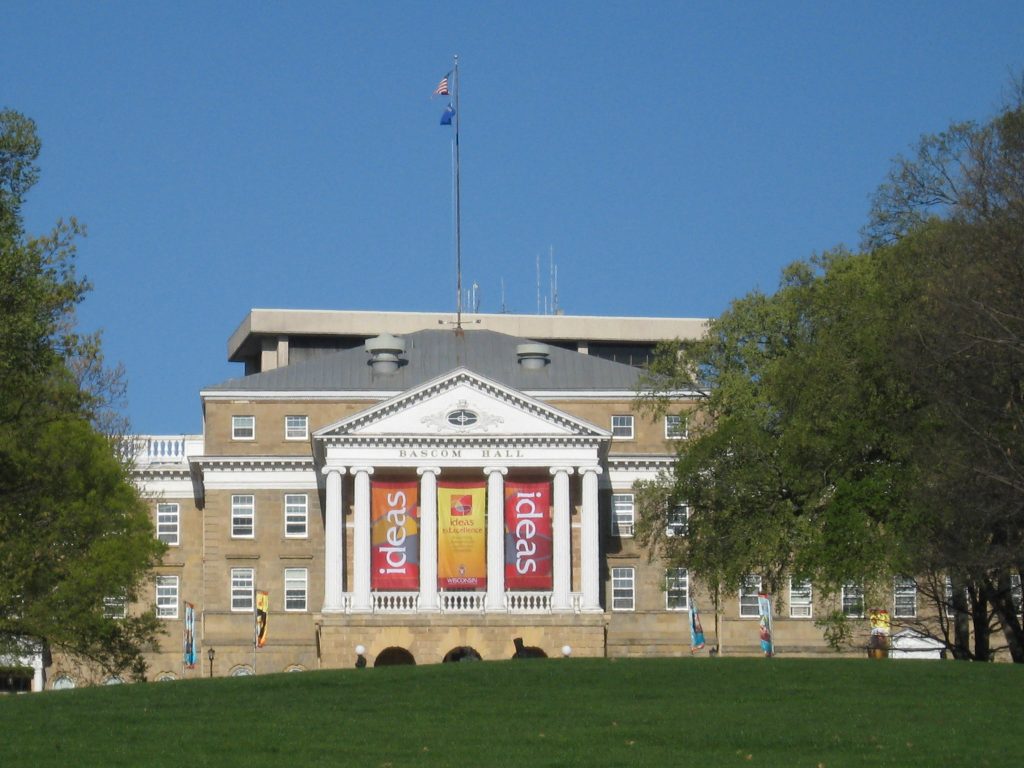
My Public Ivy Schools for 2026-27
It’s been a while since I’ve done a Public Ivy list. So, I was curious to see if my past criteria held up and left a decent selection of public options. My definition os a Public Ivy is not based on selectivity or test scores, but on how well a school helps it’s students towards their degree at a reasonable (for 2026 anyway) price. I’m posting this week when I take a visit to one of these schools: the University of Maryland-College Park.
My criteria for a Public Ivy have been:
- 90$ or better freshman retention rate
- 70% or better four-year graduation rate
- An estimated total cost of attendance less than the lowest tuition and fees charged by an Ivy League school. In this case it was Harvard which charges $68,40o.
Which public institutions met all three criteria?
- Binghamton University
- Florida State University
- Georgia Tech
- Indiana University-Bloomington
- Penn State-University Park
- Texas A&M University
- The College of New Jersey
- The Ohio State University
- University of Delaware
- University of Florida
- University of Georgia
- University of Illinois at Urbana-Champaign
- University of Maryland-College Park
- University of Minnesota-Twin Cities
- University of Massachusetts-Amherst
- UNC-Chapel Hill
- University of South Carolina
- University of Texas-Austin
- University of Wisconsin-Madison (photo up top)
I’ve never had Ohio State, South Carolina or Wisconsin on a previous Public Ivy list. The other schools have made appearances in prior years,
Some familiar names are not on this list.
These schools more than meet the criteria for retention and graduation rates, but exceed my cost threshold.
- Unievrsity of California: UC-Berkeley, UC-Irvine, UCLA, UC Santa Barbara
- University of Connecticut
- University of Michigan
- University of Virginia
- William & Mary
Those are usually schools that people associate with being “close to an Ivy” in terms of their educational offerings although only one Ivy (Cornell) offers anything close to the academic options found at a public university.
I realize that some people may not like the phrase ‘Public Ivy’.
That term was conceived by Richard Moll, a former dean of admissions, to recognize schools that he believed to be the nation’s best public universities in 1985. In the book he covers the honors opportunities at his chosen schools, with the belief that they are “equal to an Ivy League education.”
Had he written that they were the equal of a well-endowed selective liberal arts college where classes are smaller and instruction more personal, I would not argue, nor would I write these posts. However, an Ivy League experience for a freshman or sophomore is more likely to be large lectures much like they would get at a larger state university, unless one chooses to go to Dartmouth, where less than one percent of all undergraduate classes have over 100 students.
Are my Public Ivy schools the best buys in higher education?
If you are looking for a pre-professional business or engineering program that can send one right into the workforce after graduation, it’s often tough to undercut public universities, especially if you live in a state like Florida, Georgia or Texas.
But I have also visited private liberal arts colleges that prepare their students exceptionally well for work or further education. They offer a more personal experience and leave families in less debt than much larger public schools. Some are quite selective, but others are not. This is especially true in Pennsylvania, the state that has more liberal arts colleges than any other. It has been common to hear that a mid-pack admitted student at Penn State can qualify for enough scholarship aid to make an in-state private college experience less expensive than the large public universities.
Don’t leave this page believing that Ivies, mid-sized Ivy-like/near-Ivy and very large state schools are the only colleges worth your time and effort. Many schools offer instruction, direction and networks within a success-driven culture. I write these posts to help families find them.