I Still Don’t Buy Into the Forbes Definition of a Public Ivy
Forbes magazine recently came out with their third list of schools that were considered to be a Public Ivy These schools included:
- United States Air Force Academy
- University of Florida
- Georgia Tech
- UNC Chapel Hill
- Purdue University
- UT-Austin
- University of Virginia
- William & Mary
- University of Wisconsin – Madison
The term Public Ivy has been with us for just over 40 years. It was coined by Richard Moll, a former director of admissions at Bowdoin College (ME), the University of California-Santa Cruz and Vassar College (NY). In his book, The Public Ivies: A Guide to America’s Best State Colleges and Universities, Moll looked deeply into public colleges and universities that offered more personalized education through honors colleges and other special programs.
These schools on the Forbes list were among Moll’s original Public Ivies:
- UNC-Chapel Hill
- UT-Austin
- University of Virginia
- William & Mary
Forbes used these criteria to rank their schools:
- High standardized test scores. Test scores are considered to be an objective measure of success. I can see that point: the tests are a measure that can be used to compare applicants from the same high school as well as those who attended different high schools. The University of California system schools are excluded from this list because they are test free as is the University of Washington.
- Acceptance rate. It had to be below 50 percent for a public college to be considered a Public Ivy. I don’t buy into this for reasons that you will read about in a moment.
- Employer satisfaction, measured through a recruiter survey. However, other schools have highly regarded career services and many employers recruit regionally.
An acceptance rate is not a measure of “quality,” it is a measure of demand.
Demand for a seat in the freshman class at a public university is driven in part by price, especially for in-state applicants. It’s also driven by academics and convenience as well as the social life on campus..These considerations and brand recognition drive application numbers to very high volumes, even among applicants who are not likely to be accepted.
Florida residents, for example, will not be discouraged to apply to the University of Florida because they want to try and the application is easy, no matter the grades and test scores. You don’t need to write anything more than the Common App essay unless you’re interested in the Honors College or the Innovation Academy.
Forbes’ criteria say nothing about student success, or the quality of the school’s career services.
However, their story mentions that employers have expressed more interest at recruiting at these schools. That’s fine, but employers have not become less interested in other public universities that have always been fertile grounds for finding talent.
Nor do they consider the costs.
Out-of-state charges at the University of Virginia and the College of William & Mary are about the same as the more selective private research universities.
So, what are some better measures of a Public Ivy, given the population that gives more consideration to public colleges?
Freshman retention at a Public Ivy should be no lower than 90 percent.
One great characteristic of the private Ivies as well as Ivy-like schools is that virtually everyone who gets in stays in. The same should be true for a Public Ivy. The resources dedicated to academic advising, honors-level instruction, and career development are much better than they were four decades ago. Every school on the Forbes list met this criteria.
Seventy percent or more of a freshman class at a Public Ivy should graduate within four years.
Another great characteristic of the more selective private schools is that most of their students graduate on time. The same should be true of a Public Ivy. There are some exceptions. Early entry into an advanced degree program is one, so is cooperative education, aka ‘co-op’. Co-op students alternate between classroom instruction and full-time work experience for as much as three years. One school on Forbes’ Public Ivy list, Georgia Tech, has a very large co-op program. When I considered co-op, every school on the Forbes’list met this criteria.
A Public Ivy should cost significantly less than private universities for every student.
This is my view regardless of a family’s ability to pay or whether they hail from in-state or elsewhere. The estimated total cost of attendance for a non resident should be less than the least expensive Ivy charges for tuition and fees alone. This past cycle Princeton had the lowest tuition and fees at $62, 700
When costs are a factor, these were schools where Forbes and I agree
- Georgia Tech
- University of Florida
- US Air Force Academy
- UNC Chapel Hill
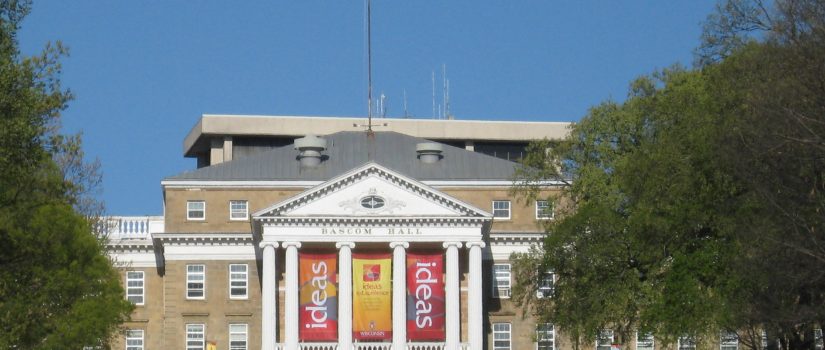
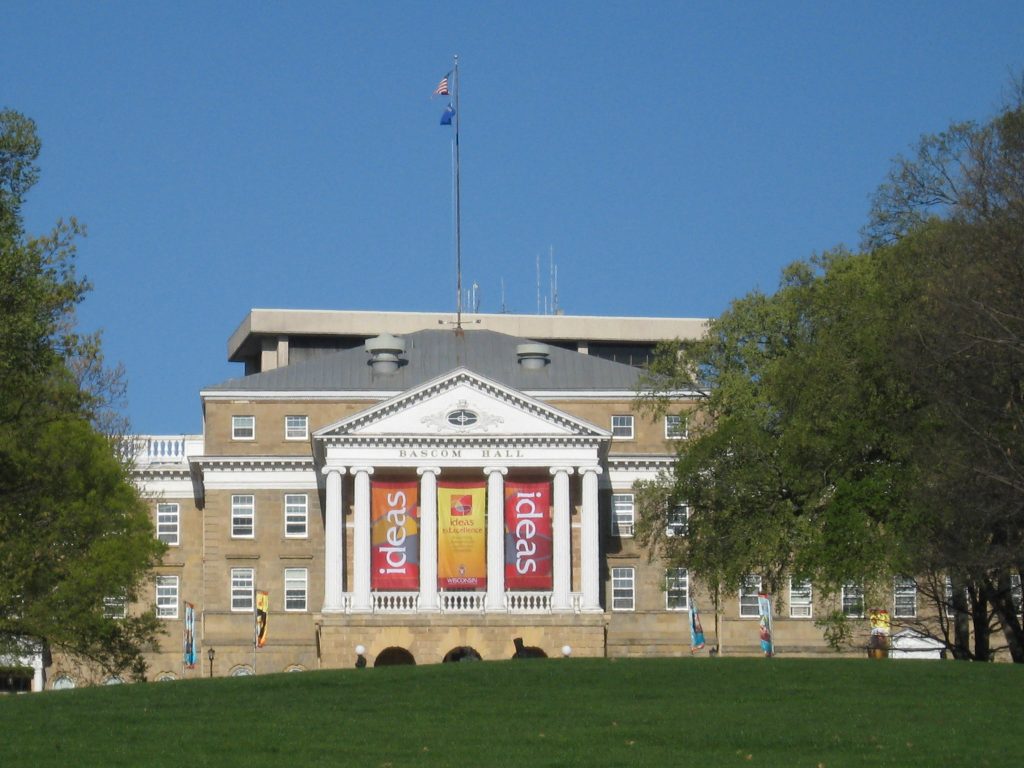
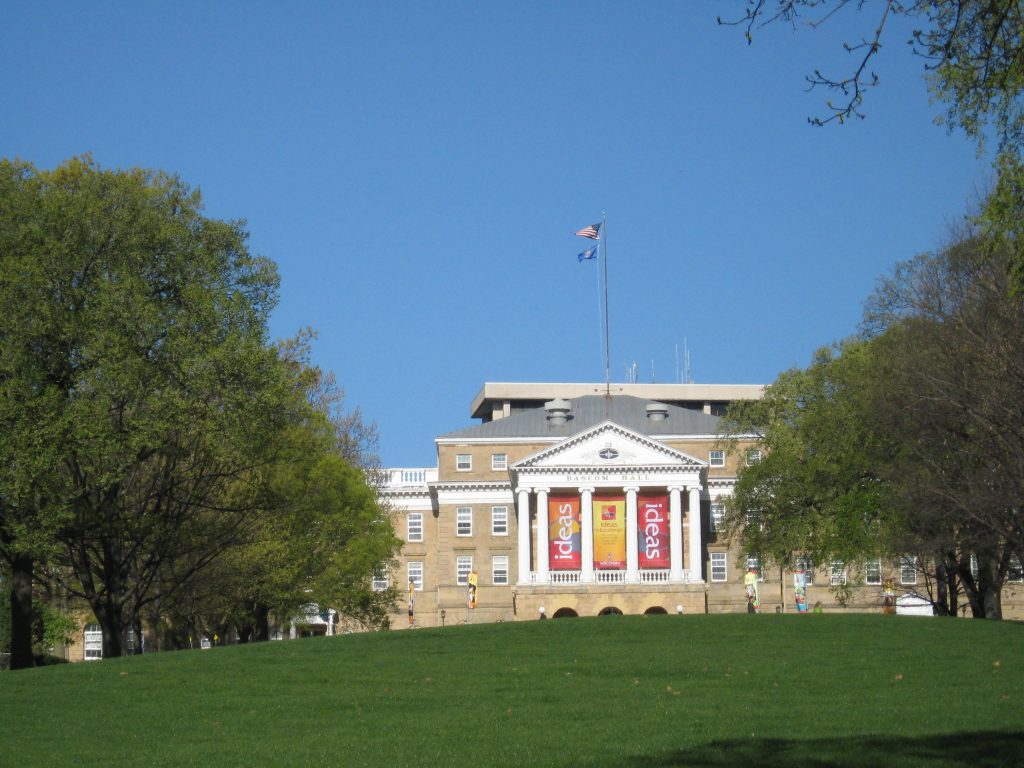
- University of Wisconsin-Madison (photo up top)
What are some of the schools that are missing?
- Binghamton University (NY)
- Florida State University
- Indiana University-Bloomington
- Miami University-Ohio
- North Carolina State University
- Rutgers University-New Brunswick
- The College of New Jersey
- US Military Academy
- US Naval Academy
- University of Connecticut
- University of Delaware
- University of Georgia
- University of Massachusetts-Amherst
- University of Minnesota-Twin Cities
.If Forbes wants to consider test scores and acceptance rates to be important criteria for a Public Ivy, that’s their business..The magazine has only proved what I have stated many times: a ranking is based on whatever the ranker decides to rank.