
Will Clemson Continue To Be Attractive To NJ Residents?
I stumbled upon a fairly biased story about Clemson’ University’s financial position. It led me to wonder if this school will continue to be popular with New Jersey residents, especially if their families need to become more cost conscious.
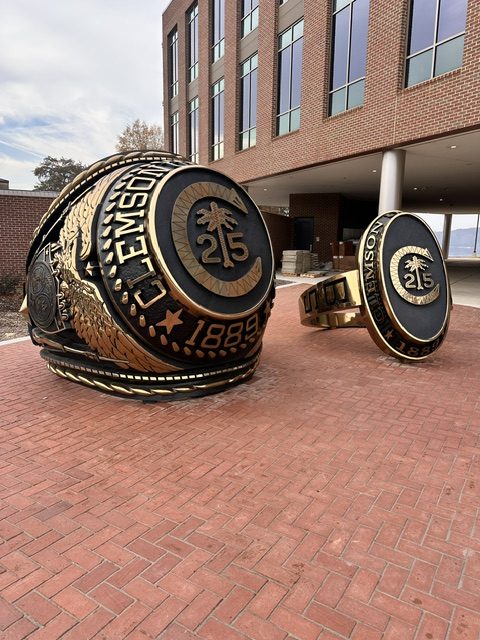
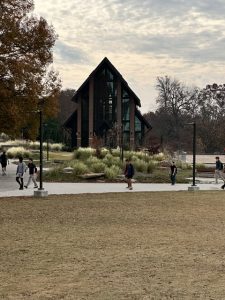
I understand reasons for the interest in Clemson. It’s a lot like Penn State’s main campus, especially in school spirit and location. This is also a very attractive campus. I dropped some photos that my friends Caitlin Zygmont and Donna Sakabu shared from their visits.





However, Clemson has just over 24,000 undergrads, while Penn State has nearly 43,000. Ten years ago, Clemson had fewer than 19,000.
More interesting to me: the number of out-of-state undergraduates rose from just under 5,800 in 2016 to over 9,400 in 2025. Out of state enrollment went from 32% to 39% of the undergraduate population. New Jersey is the #2 sending state after North Carolina. At the same time, Clemson has frozen in-state tuition and fees since 2019-20. Out-of-state charges, however, exceeded $40,000. this past academic year.
It’s clear to me why Clemson needed more non-resident students. The university needed the revenues.
However, the tuition freeze has also made Clemson a popular option for the resident students. This, and the popularity of the school with non-residents, drove the acceptance rate down to 42% for the Class of 2029. The rate for the Class of 2030 is likely to be below 40% The admissions office also reported that over 90% of all South Carolina residents were offered a path to Clemson. Such pathways include a summer start on campus, a summer global start, a STEM bridge program, as well as the Spectrum Program for neurodivergent students.
South Carolina politicians clearly have their concerns.
- They want Clemson to be more affordable to residents.
- However, they do not want to appropriate more money to the school.
- So, they’re asking the university to make cuts in academic and student programs, much like flagships in other states have been asked to do.
- But they’re still proud of the high profile that Clemson has earned outside of South Carolina.
There’s been no noise about tighter restrictions on out-of-state enrollment as some Florida politicians proposed to do, and failed. South Carolina has a state scholarship program. However, it’s less ambitious than the programs in Florida or Georgia. But there’s been no noise about increasing that budget.
My hunch is that Clemson will charge non-residents as much as they can for as long as they can.
How long they can depends on:
- How well Clemson continues to hype its value proposition versus other schools. This school has done a great job of hyping its rankings in sources such as Niche and Princeton Review. It helps that Clemson does not face in-state competition from a prestigious mid-sized research university such as Duke, Emory or the University of Miami.
- Athletic success. Whatever anyone thinks about the state of college sports, athletic success brings considerable attention to a large flagship state school. This has been especially true at Clemson where the football team has won two national championships and ranked in the top 25 each year from 2005 to 2025.
- Selectivity of the schools in neighboring states. UNC-Chapel Hill is definitely more selective than Clemson; so is North Carolina State, which offers selection of majors more similar to Clemson. So are the University of Georgia and Georgia Tech. I can imagine that students from these states who cannot get into their home state flagship will continue to apply to Clemson.
As for New Jersey students, the decision to opt for Clemson will depend on affordability as well as appeal. Clemson’s non-resident tuition and fees are over wove Rutgers’ resident charges. Rutgers is actually the higher-ranked school, if you care about US News rankings. New Jersey’s flagship ranks 20th, Clemson 36th among public National Research Universities.
Next year Clemson will have non-resident direct charges (tuition & fees, room & board, books, courses & supplies) of over $58,000. The university estimates just over $8,000 for additional indirect charges. At $66,000. before scholarships, Clemson has a lower estimated cost of attendance than private institutions. But it still costs a lot more than the in-state charges at any other flagship state school.
The question is: will out-of-state parents continually want to make up the difference?
Honestly, I don’t know.
For a New Jersey resident the decision could be to choose Clemson over a similar, equally expensive school such as Penn State or Virginia Tech. This presumes that the student has to borrow the maximum in Federal loans and that their parents pay the difference or find a way to work within the tighter borrowing limits of the Parent PLUS loan program to cover college and further education. A seriously cost-conscious New Jersey family might start to like Rutgers, or another flagship with a larger scholarship, a little more.